How to build a shot list like an editor
The failure a shot list prevents
Ask anyone to make a dozen images for a project and they will produce a dozen versions of the same idea. Not because they lack imagination, but because without a plan each new frame is invented in reaction to the last one, and reaction produces sameness. You end up with nine medium shots of a subject from slightly different angles and nothing to open or close with.
Editors solved this a century ago. Before anyone touches a camera, they write down what the story needs: something to establish the place, something to carry the subject, something intimate, something textural. The list is boring on purpose. It exists so that judgment happens once, calmly, rather than twelve times under pressure.
Coverage: the four distances
Every usable set moves between distances. This is the part people skip, and it is the part that makes a set feel complete.
| Distance | What it does | Typical count in a set of 12 |
|---|---|---|
| Wide / establishing | Says where we are. Gives the set its sense of place and usually makes the best hero. | 1-2 |
| Medium | The workhorse. Subject and context together - the frames you will actually use most. | 4-6 |
| Close | Hands, faces, objects at arm's length. Where warmth and specificity live. | 3-4 |
| Detail / texture | Surface, material, an abstract fragment. The connective tissue between bigger frames, and the best backgrounds for text. | 2-3 |
If you write a list and notice every line is a medium, that is the diagnosis and the cure in one glance.
Work backwards from where the images will live
A shot list is not a wish list. Start from the destinations and let them dictate the frames. If the images are for a landing page, you already know from the sections that page has: a hero, a few section breaks, a closer. If they are for a launch campaign, you need a hero, a couple of social crops, and a quiet frame for the email.
Write the destination next to each line. Frames with no destination are the ones to cut before you spend anything generating them.
What a line looks like
Vague lines make vague images. The fix is a concrete noun plus exactly one action, then the practical details:
strong: hands wrapping a loaf in brown paper, close, 2:3, section break
weak: someone working late
strong: empty desk with monitor still glowing, one chair pushed back, wide, 3:2, hero
Notice that the strong lines contain no style words at all. Light, grain, palette, and mood belong in the style spec that governs the whole set - not in individual lines, where they will fight the spec and drift. That separation is the core of the Locked Look method: style frozen, subject varied.
Leave room for words
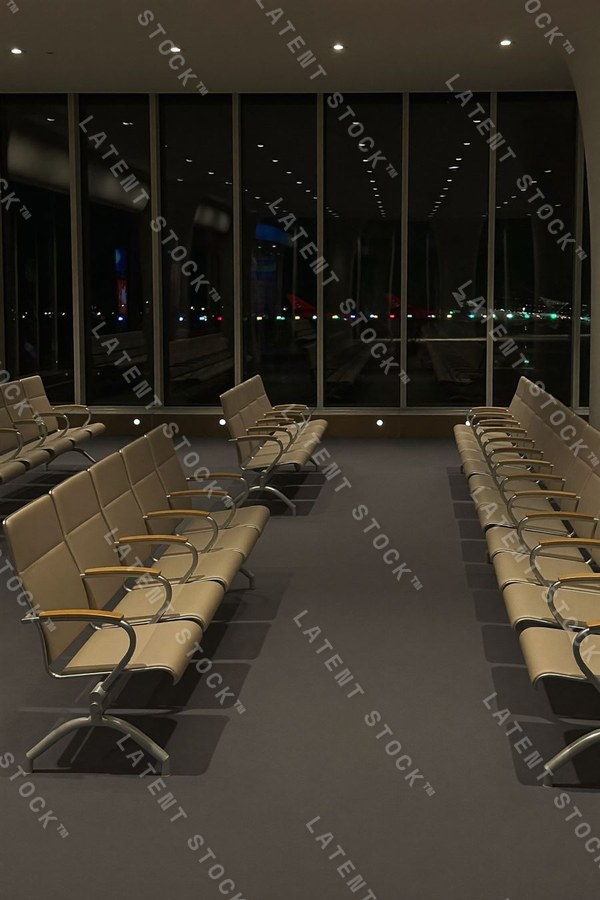
The most commonly skipped line in any shot list is the one that says "with space for a headline." If an image is going to carry type, it needs a deliberate area of calm - a blank wall, a stretch of sky, a tabletop, a pool of shadow - and that has to be planned, because it almost never happens by accident.
Plan at least two frames per set with that room built in, and note which side the space is on. A beautiful image with the subject dead center is useless as a hero the moment a headline needs to go somewhere.
Decide ratios up front
Mixing aspect ratios mid-set without a plan is what makes a gallery look ragged. Choose the grid before you start: a common editorial pattern is mostly portrait frames with a landscape every fourth or fifth image, so the set has rhythm when laid out. Write the ratio on each line, then hold to it.
A worked example: a launch set in twelve frames
- Empty office at dusk, monitors on, confetti on a desk - wide, 3:2, hero
- Wall of the same room, mostly bare, light raking across - wide, 3:2, headline space right
- Two people mid-conversation over a laptop, backs partly to camera - medium, 2:3
- Someone asleep across chairs, coat as a blanket - medium, 2:3
- Desk from above, cups and cables and one notebook - medium, 2:3, section break
- A hand pushing a mouse aside to make room - close, 2:3
- Face lit only by a screen, eyes down, not smiling - close, 2:3, testimonial section
- Coffee going cold beside a keyboard - close, 2:3
- Cable tangle under a desk - detail, 2:3
- Confetti caught in the gaps between keys - detail, 2:3, background for text
- Window reflection of the room at night - detail, 3:2
- Dawn through the same window, room empty - wide, 3:2, closer
Twelve lines, four distances, two frames with planned type space, a ratio on every line, and a first and last frame that bookend the story. That list can be handed to a photographer or run through a generator and produce a set either way - which is the test of a good one.
Mistakes worth naming
- All mediums. The most common failure and the easiest to catch: count your distances before you start.
- Style words in the lines. They belong in the spec. In the lines they cause drift.
- No closer. Sets that stop instead of ending. Plan the last frame as deliberately as the first.
- Everything centered. Leaves nowhere for type and makes a monotonous grid.
- Writing the list after generating. At that point it is not a plan, it is an inventory of what you happened to get.
FAQ
What is a shot list?
A planned inventory of the specific frames a project needs, written before shooting or generating. Each line names one image: subject, distance, ratio, destination.
What should each line include?
A concrete noun with one action, the camera distance, the aspect ratio, and where the image will be used. No style words - those live in the set's style spec.
How many images should a set contain?
Ten to fifteen suits most projects: 1-2 wides, 4-6 mediums, 3-4 closes, 2-3 details. Under eight feels thin; over twenty-four mostly goes unused.
Why do my images all look the same despite different prompts?
Almost always because they sit at the same camera distance. Coverage is about distance and framing, not only subject.
Should I plan for text over images?
Yes - reserve at least two frames with deliberate empty space, and note which side it is on. It rarely happens by accident.
Or skip the planning entirely.
Every set in the library is a shot list already executed - coverage across distances, planned ratios, room for type. Take three downloads free - pull them from one studio - or browse all 41.